The new Keyword in JavaScript

Imagine JavaScript as a factory.
In this factory, we don’t create objects randomly. We follow a proper process, and thenewkeyword is the manager that supervises this process.
Today, we’ll understand:
What
newactually doesWhat constructor functions are
How objects are created step by step
How prototypes are linked
How instances are formed
By the end, you’ll see object creation in your mind, not just memorize code.
What Does the new Keyword Do?
Let’s start simple.
When you write this:
const user = new User("Asad", 22);
You might think:
“Okay, it creates an object.”
But how?
What happens inside JavaScript?
In simple words:
👉
newcreates a fresh empty object and connects it to a constructor.
Think of new as saying:
“Hey JavaScript, please create a brand-new object using this blueprint.”
That blueprint is called a constructor function.
Constructor Functions (The Blueprint)
What is a constructor?
A constructor function is just a normal function, but:
It is written with a capital letter (by convention)
It is meant to create objects
Example:
function User(name, age) {
  this.name = name;
  this.age = age;
}
Think of this like a form template:
Every user will have a
nameEvery user will have an
age
But right now…
❌ No object is created
❌ No memory is used
It’s just a plan, not the real thing.
Object Creation Process
Now comes the heart of the topic
Let’s see what happens when we use new.
const user1 = new User("Asad", 22);
Behind the scenes, JavaScript does 4 steps automatically.
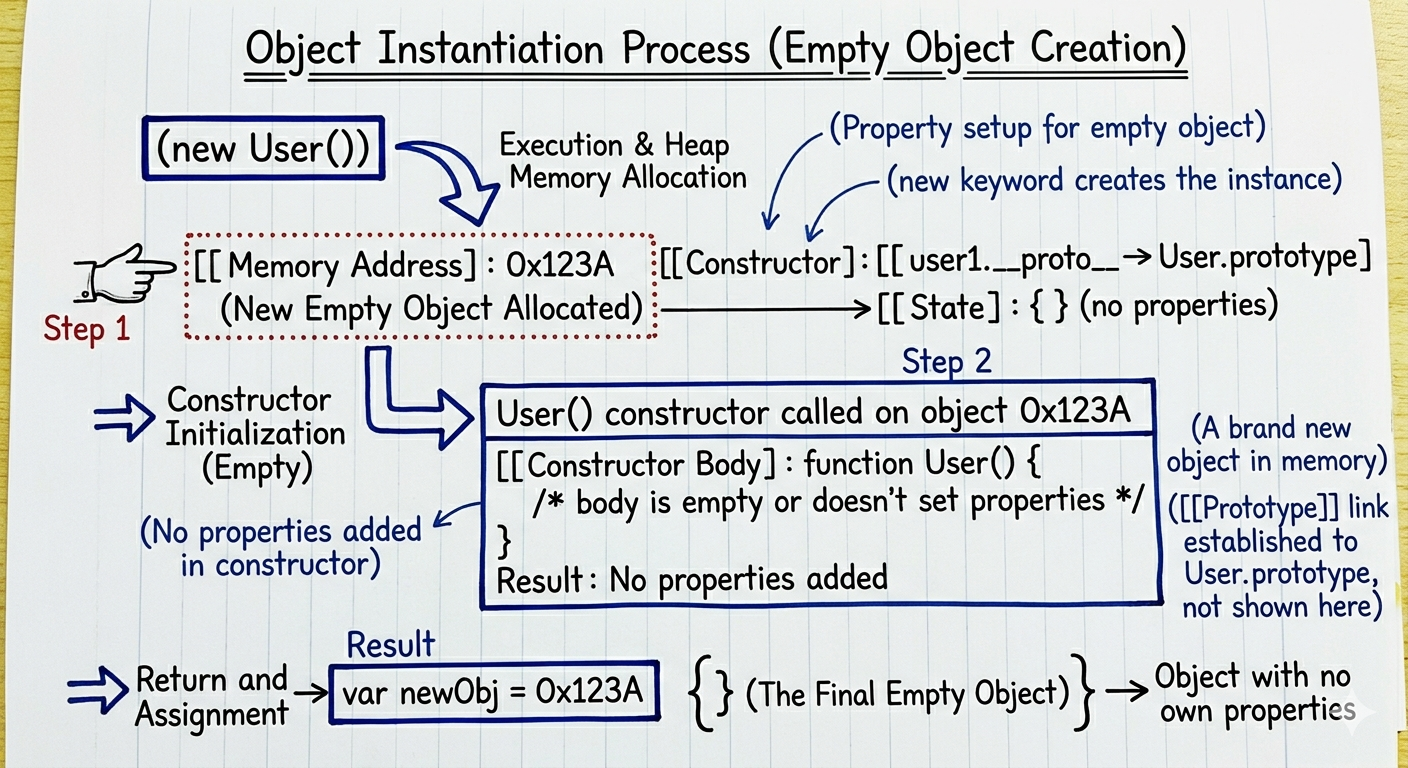
🔹 Step 1: A New Empty Object Is Created
JavaScript secretly creates
{}:
{}
You don’t see it, but it exists in memory.
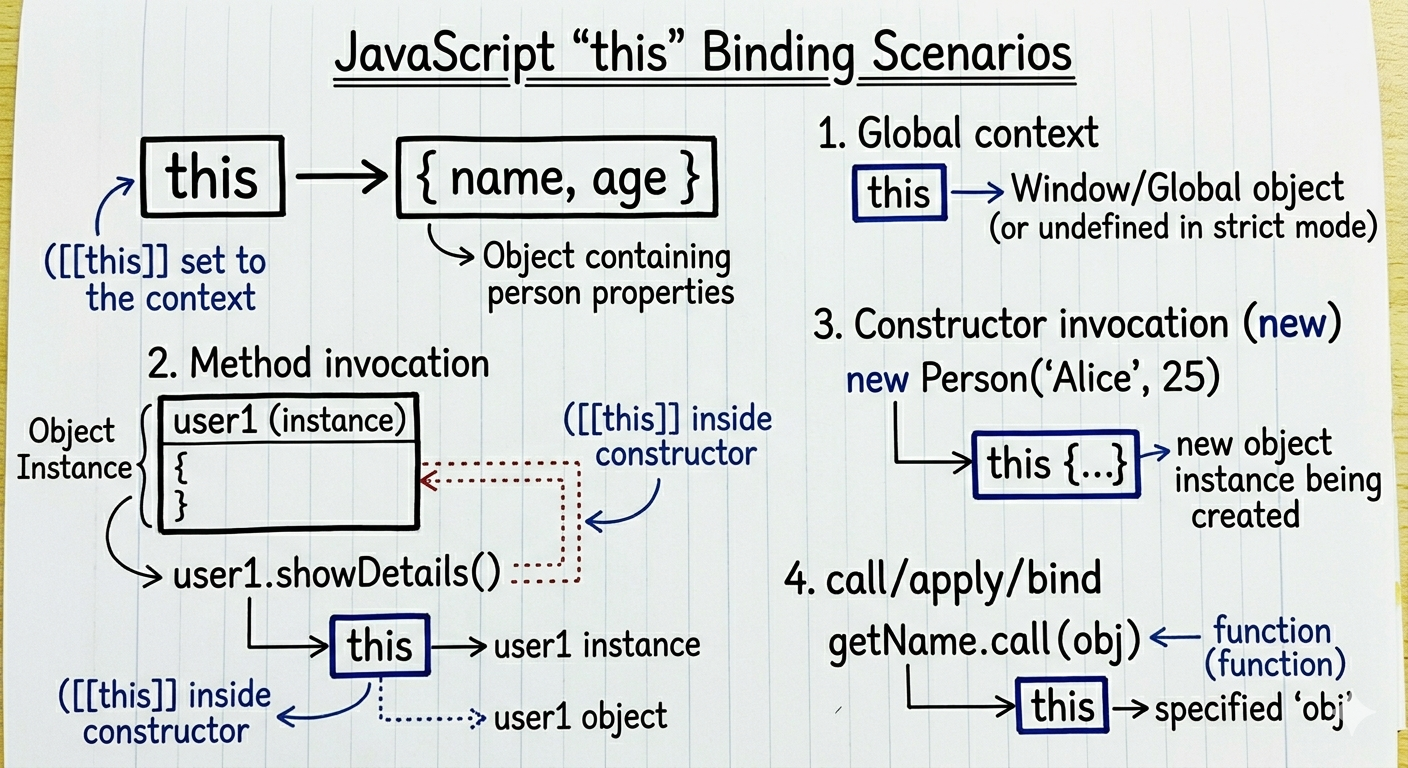
🔹 Step 2: this Points to That New Object
Inside the constructor:
this.name = name;
this.age = age;
Now this is not random.
👉 this = newly created object So it becomes:
{
  name: "Asad",
  age: 22
}
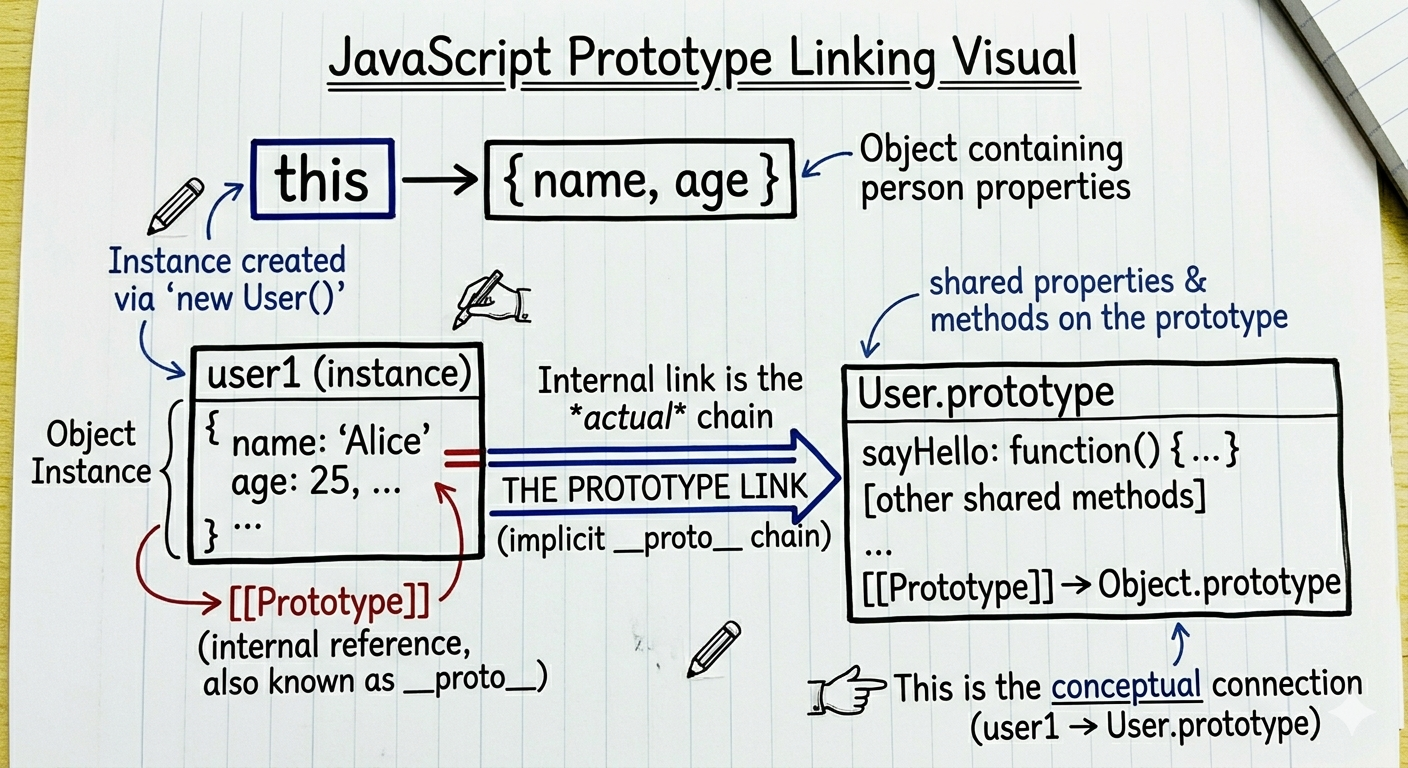
🔹 Step 3: Prototype Is Linked Automatically
This is where beginners usually get confused 😅
So let’s slow down.
JavaScript connects the object to:
User.prototype
Like this (conceptually):
user1.__proto__ === User.prototype
Why is this important?
Because methods live in prototypes, not inside every object.
🔹 Step 4: Object Is Returned Automatically
You never write return
JavaScript does it for you.
So finally:
const user1 = {
  name: "Asad",
  age: 22
};
🎉 Object created successfully.
How new Links Prototypes
Let’s add a method.
User.prototype.sayHi = function () {
  return `Hi, my name is ${this.name}`;
};
Now check:
user1.sayHi();
Question:
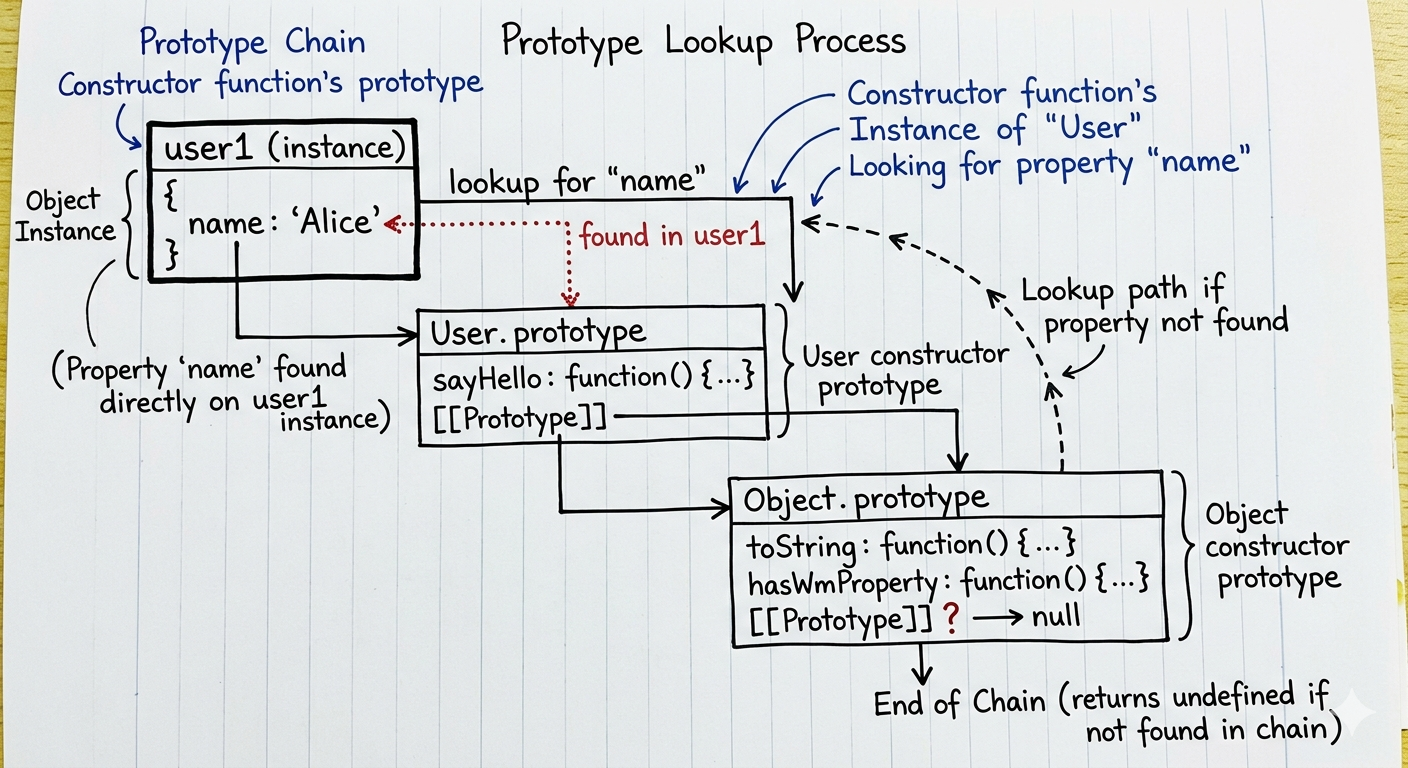
Where is sayHi stored?
Answer:
❌ Not inside user1
✅ Inside User.prototype
JavaScript says:
“If property not found in object, look in prototype.”
This is called the Prototype Chain.
Instances Created from Constructors
Every time you use new, you create a new instance.
const user1 = new User("Asad", 22);
const user2 = new User("Ali", 25);
Both are:
Created from the same constructor
Linked to the same prototype
But are different objects in memory
user1 === user2 // false
Think like this:
Constructor = Factory machine
Instances = Products coming out of it
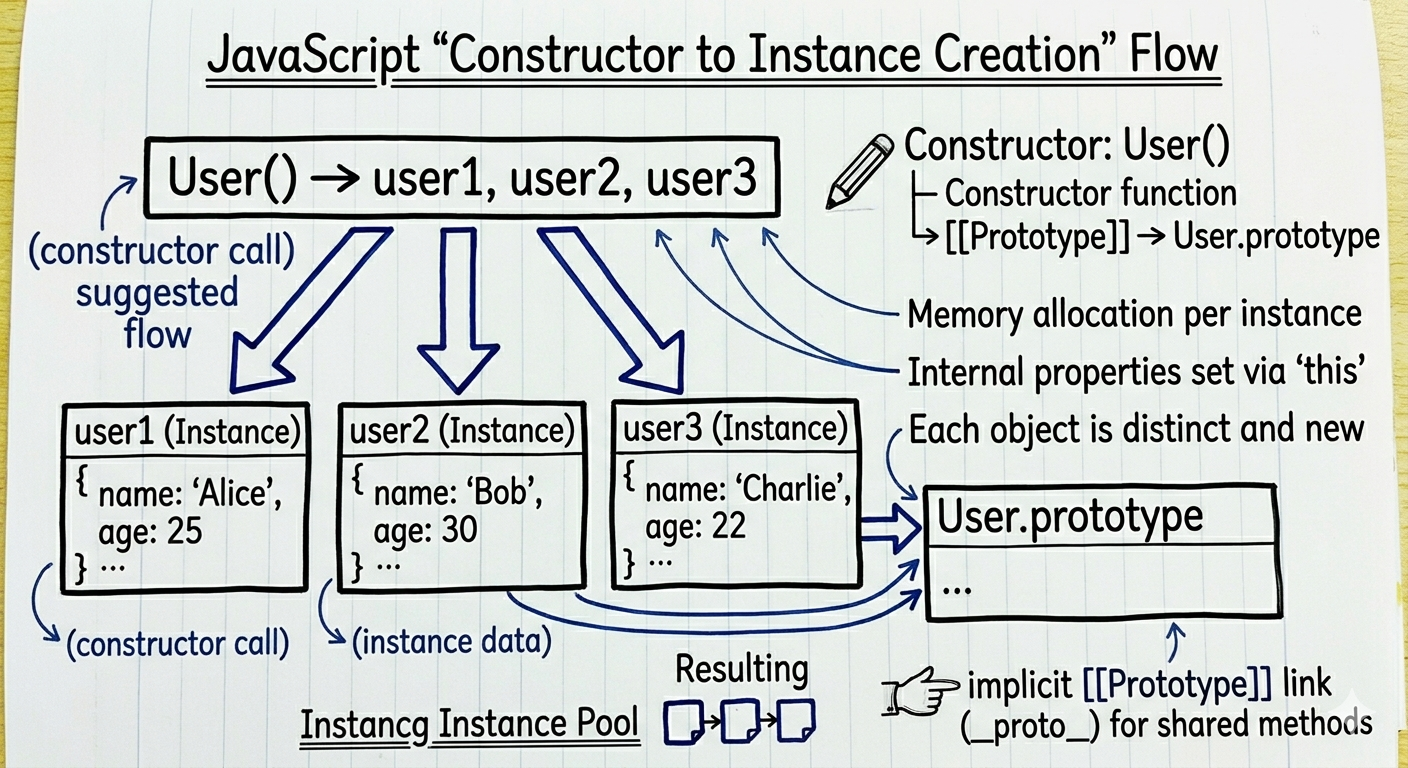
Relation Between Constructor and Object
| Thing | Role |
|---|---|
| Constructor | Blueprint |
new |
Builder |
| Object | Final Product |
| Prototype | Shared behavior |
One constructor
Many objects
One shared prototype
Why new Is Important
Without new:
thisbreaksPrototype linking doesn’t happen
Object isn’t created properly
That’s why new is not optional with constructor functions.
Final Mental Picture (Remember This)
Whenever you see:
new Something()
Immediately think:
1️⃣ Empty object created
2️⃣ this points to it
3️⃣ Prototype is linked
4️⃣ Object is returned
If you remember this flow,
👉 you already understandnewbetter than most beginners


